

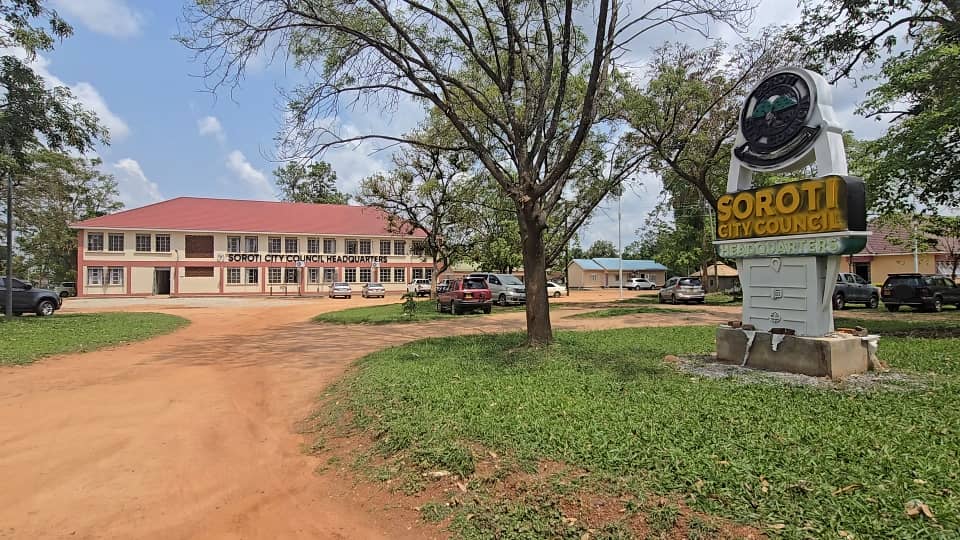
Authorities and stakeholders in Soroti City have expressed concern over rapid urban growth occurring without a comprehensive master plan, warning that uncoordinated development could undermine the city’s future.
The Soroti City Clerk, Batanda Paul, said the absence of an updated master plan is one of the biggest challenges facing the young city.
Without clear planning guidelines, developments risk emerging in inappropriate areas, leading to conflicts in land use.
“Without a master plan, you may find factories coming up in residential areas, churches next to homes, or even butcheries operating in places not meant for such activities,” Batanda explained.
“A master plan guides development so that residential, industrial and civic areas are clearly defined, allowing people to live in a structured environment.”
Soroti was elevated to city status in 2020, after being upgraded from a municipality. However, Batanda noted that while the former municipality had a master plan covering about 17 square kilometres, the city’s boundaries expanded to approximately 237 square kilometres after several sub-counties were annexed from Soroti District.
Nearly 70 percent of the newly added land remains unplanned.
City authorities say they have begun preparations to develop a new master plan in phases using local revenue.
Batanda revealed that the city has initially allocated about Shs100 million for the process, though estimates suggest close to Shs400 million may be required to cover all wards.
“We intend to use our in-house staff, including surveyors and physical planners, to reduce the cost rather than hiring consultants,” he said.
Samuel Otati, Soroti City Physical Planner, said the city has already started engaging communities and stakeholders through sensitisation meetings to help residents understand the importance of physical planning.
“The city is experiencing rapid urbanisation and an influx of people seeking opportunities, which has increased pressure on infrastructure and land use,” Otati said, noting that the city currently has about 138 kilometres of road network supporting mobility.
Some stakeholders, however, warn that the absence of a full physical development plan could lead to chaotic urban growth. Local opinion leader Benson Ekue cautioned that the city risks becoming a “big slum” if planning challenges are not addressed urgently.
“We have a city that is growing without a master plan. Everyone is surveying land and creating small plots that do not match the design of a modern city,” Ekue said.
Despite these concerns, Soroti City Mayor‑elect Francis Esudu says the city leadership is committed to developing a comprehensive master plan to guide infrastructure development, zoning of residential and industrial areas, and investment.
Esudu noted that proper planning would help the city attract investors and plan road networks effectively as it positions itself as a regional hub for business and development in Eastern and Northern Uganda.
